
One of the most extraordinary parts of Tela Bay is the massive reef of elkhorn corals (Acropora palmata) on its western flank, a spit of land called Punta Sal. The nearby beach is called Cocolitos and the reef also called by that name. The corals grow in rich thickets here and extend for at least 4 kilometers.
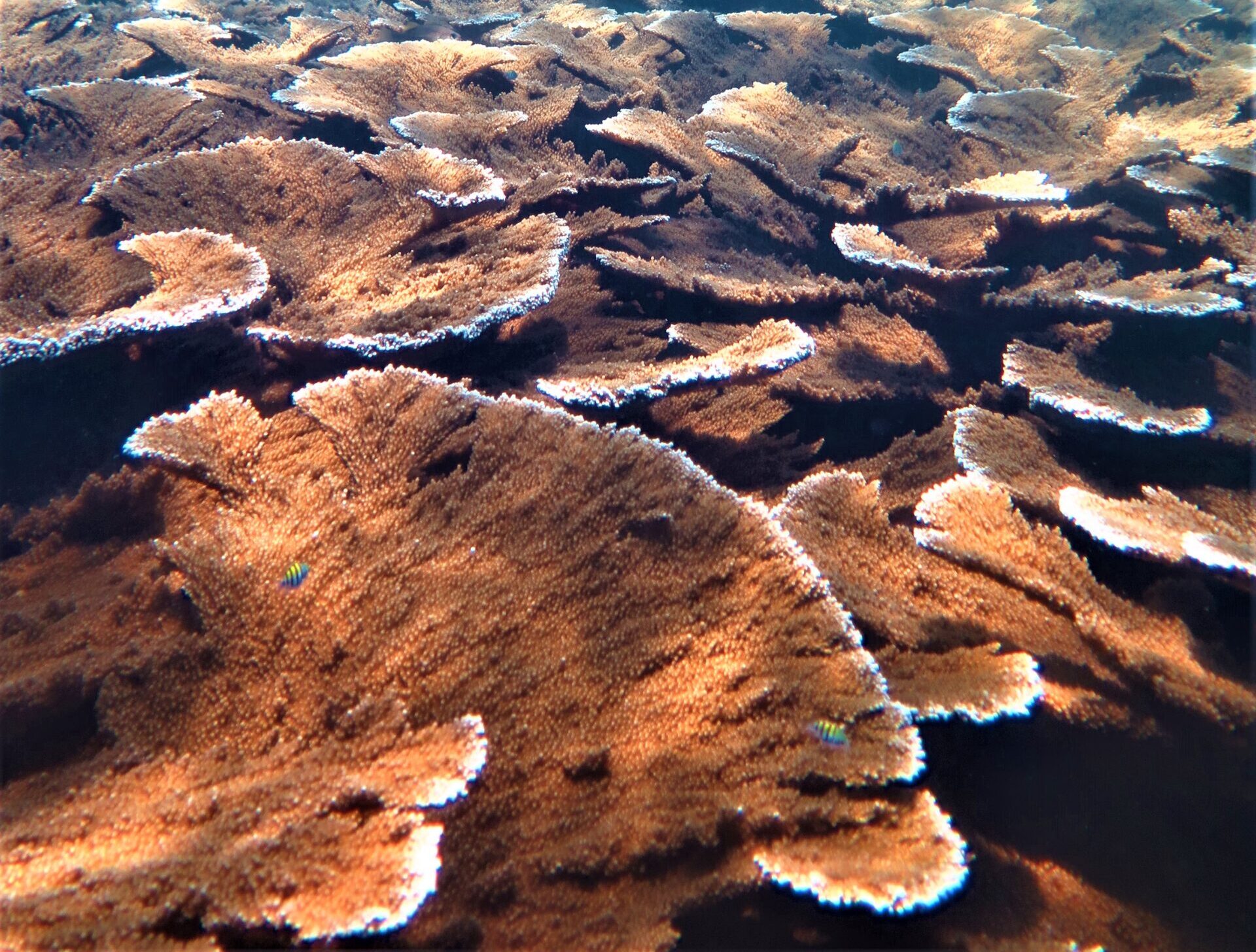
This reef near Cocolitos may be the last major jungle of elkhorns in the Caribbean. They have already been part of a world’s first project in Florida to help restore elkhorn corals there.
We have lots of hypotheses about why these corals are so unusually resilient. The hypotheses fall into two buckets: there’s something special about the animals themselves or its something special about the environment. Of course, it could also be both.
Translocation Experiments
One great way to test which of the two buckets plays a bigger role is called a translocation experiment. If you move the corals to a different environment and they are still resilient, then you have a strong indication that there’s something special about the animals. If the lose their resiliency, then there’s probably something special about the environment.
Recognizing how critical these experiments are to the future of elkhorns, we have been working to fund projects that will allow us to move Tela’s elkhorns outside Tela Bay, to the Honduran Bay Islands, as well as other countries including Belize and Cuba. However, so far we haven’t been successful in receiving awards that will allow us to do these experiments.
In the nearer term, our partner Tela Marine, who is the co-manager of Tela Bay’s marine protected area, recognized that it would be possible to do a more modest translocation that would still provide important insights. They wrote language into their management plan that would allow for the translocation of elkhorns from the western side of the bay to the eastern side of the bay.
While the corals would still be within Tela bay, they would be moved about 25 kilometers. Water temperatures, pH, nutrient input from lagoons, and suspended sediments are considerably different.
Discovering Destruction
In August, we traveled to Tela for an ecotour with our travel partner Adzentures. About a dozen people joined us to visit Tela and dive on its resilient reefs.
On the day that we visited Cocolitos, we discovered an unfortunate tragedy. A large yacht must have dropped an anchor right onto the elkhorn corals. To be clear, this is illegal under the regulations of the marine protection area management plan. But it happened.
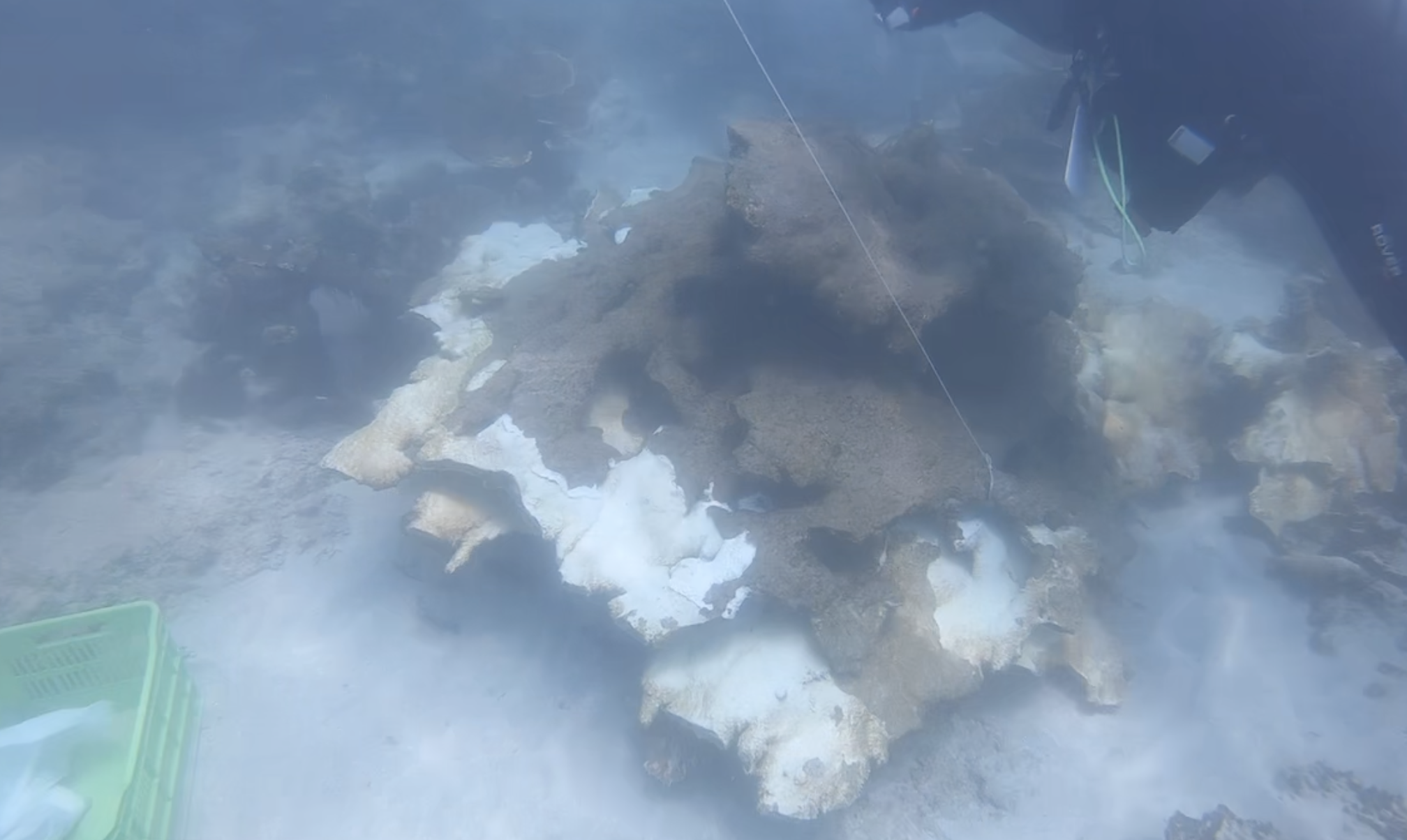
The largest colony that was overturned by an anchor. It was impossible to flip back over despite our best efforts.
Underwater, what must have been at least a thousand pound colony had been turned upside down. We tried to turn it back over, but it wouldn’t budge. Nearby colonies were shattered as well. I remember thinking that the destroyed biomass probably exceeded the entire population of wild elkhorns left in all of Florida.
These overturned and broken corals were going to become buried in the sand and die. We recognized that we had to turn this tragedy into an opportunity to both mitigate the damage and perform a translocation experiment.
The Translocation
We collected fragments of the broken coral, as well as fronds from other colonies naturally broken by wave action. (Elkhorns naturally fragment through wave action; it’s part of their reproductive strategy to break and then reattach in order to expand their population asexually.)
Approximately 100 fragments were each placed a plastic bag, and then gently layered into milk crates. The crates were lifted to the surface using a float. In the boat, we collected samples of coral tissue, preserving them in ethanol, and later freezing them. This will allow scientists to study the genetics of the coral, the metabolism of the coral, as well as their symbiotic algae to assess how they might change with the new environmental conditions.
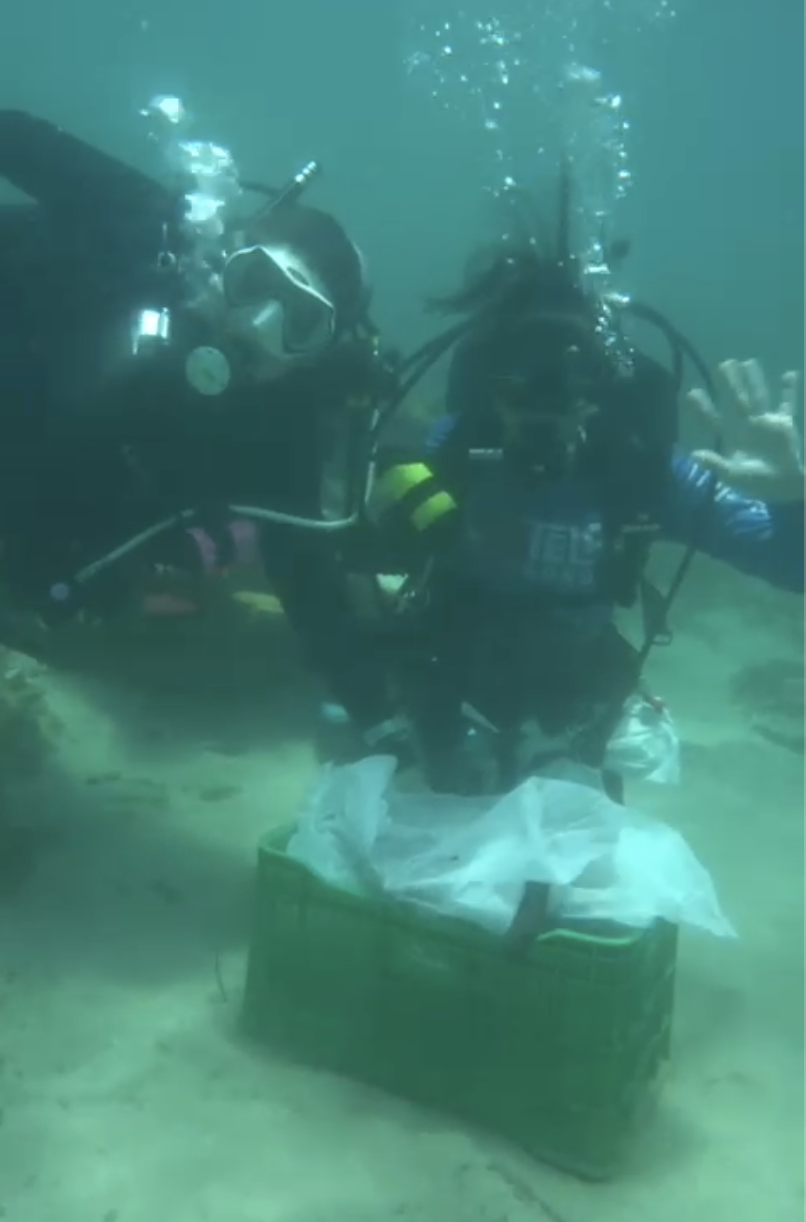
Juli and Daphne next to a milk crate that contains bagged elkhorn fragments.
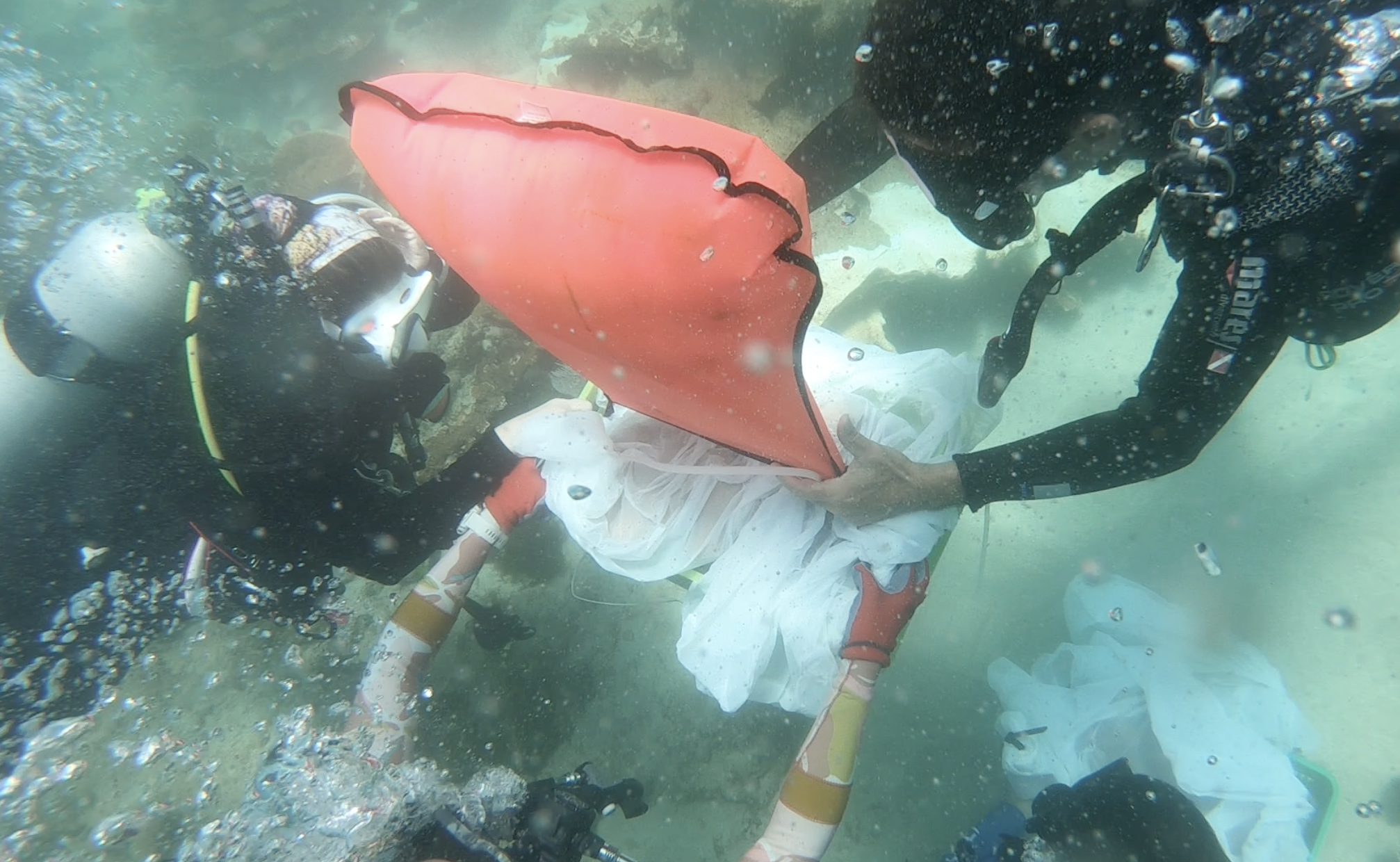
Float used to lift the milk crate to the sea surface.
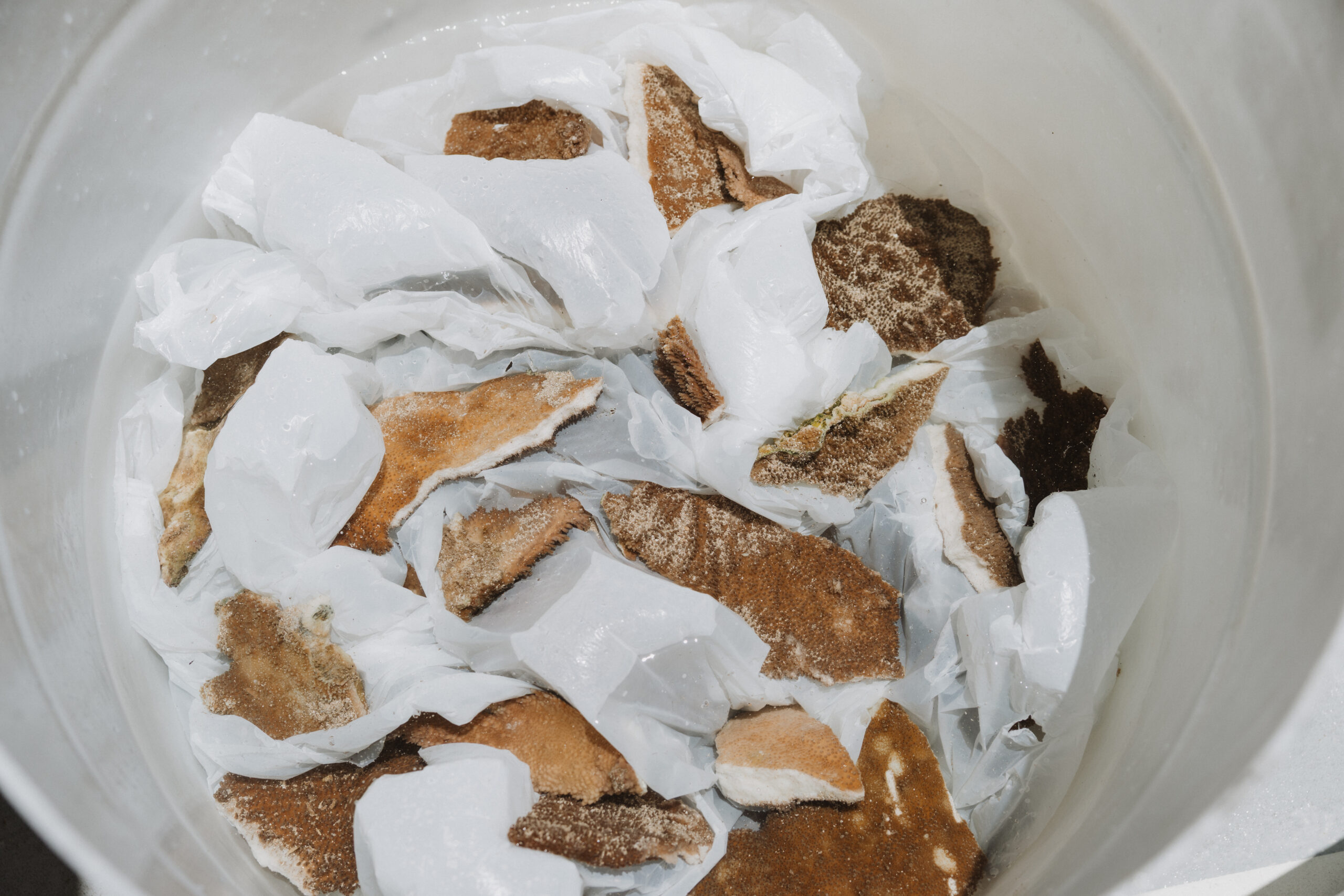
In the boat, the fragments were transferred to buckets and tissue samples were taken on the way to the translocation site.
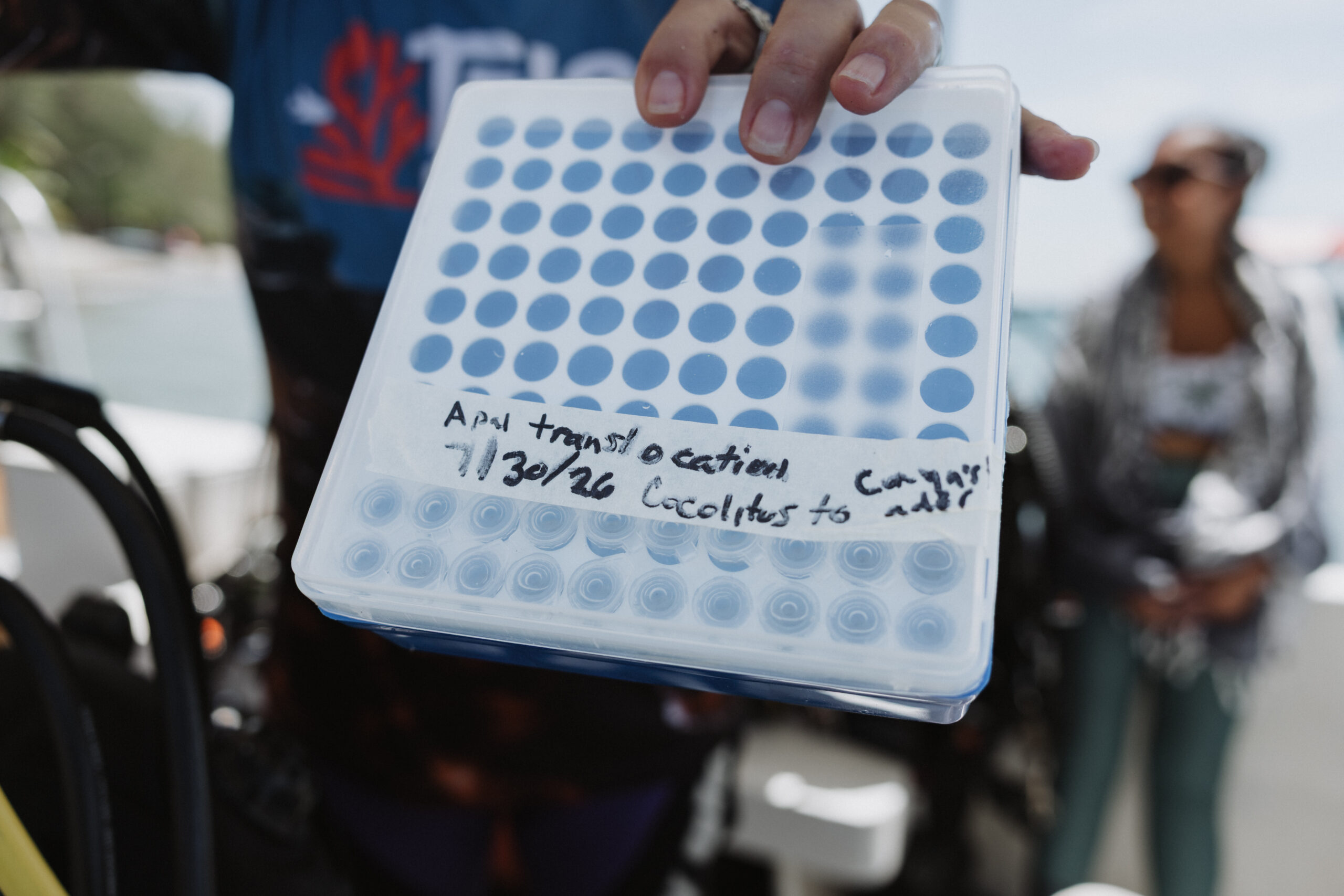
Samples from representative fragments were collected and frozen.
Then we traveled to the translocation site near La Ensenada called Conquistador. Adzenture divers wedged the fragments into the reef using protocols from other other outplanting sites in Florida.
Because of their proclivity for asexual reproduction, elkhorns are adept at quickly reattaching themselves to hard surfaces. Our partner at Tela Marine, Antal Borcsok, checked on the fragments about a week later, and they were already in the process of reattachment.
What Comes Next
Now we wait.
Antal will continue to check on the fragments. Every six months or so, we’ll revisit the site and assess the corals. We’ll take some more samples so that we can compare the corals’ physiology and symbiotic algae to their baseline before we moved them.
And we’ll let the corals tell us what it is that makes them so special. Stay tuned.