
When I was first becoming a writer, I lucked into an amazing opportunity to write small articles for National Geographic magazine. Each piece was 150 words long and I learned so much from each of those little bits of writing. About a year in, I was given the chance to write a full page: 500 words!
The piece was a celebration of gorgeous photography by Brian Skerry of the seas around Japan. My editor had already decided it would be called 3 Degrees of Japan’s Seas. As a country that is more vertical than horizontal on our globe, the degrees meant both latitude and water temperature, making its marine life especially diverse.
At the time, I hadn’t been to Japan and I was terrified of the project. I don’t think it was my best writing–I do better when I actually get to experience what I’m writing about–but I will never forget how great it felt to have my first byline on a full page in the magazine.
So, Japan’s seas have always had a kind of mystique in my mind, and it feels pretty amazing to have the chance to write this post, a report on the many seas that I actually got to experience in Japan when we traveled there with Music for the Ocean over the summer.
The Reefs of Okinawa
Our first stop was Okinawa, in the southern tropical waters. Everyone else had arrived the day before me and they all went on tourist trip out of Naha to the Kerama Islands, a small group of islands about 20 miles southwest of Okinawa known for their coral reefs. It had been EPIC, they said. They saw saw sea turtles, garden eels, a sea snake! And tons of beautiful coral.
So I had to go see for myself.
I had never been on such a big tourist dive boat before. This one held probably 45 people of all different dive levels. It felt like controlled chaos. About half were snorkelers. Some were using very technical rebreathers. I was somewhere in the middle and was assigned to a group with three other divers that only spoke Japanese. So we’d be hand signaling.
Biggest take-away: I couldn’t believe how beautiful, diverse, and abundant the coral reefs were. The first dive we ended up in a cool canyon where there were lots of big fish and tons of coral. The second was more beat up but still fun. The third we dove a bunch of bommies, little hills of coral that are super fun to investigate.
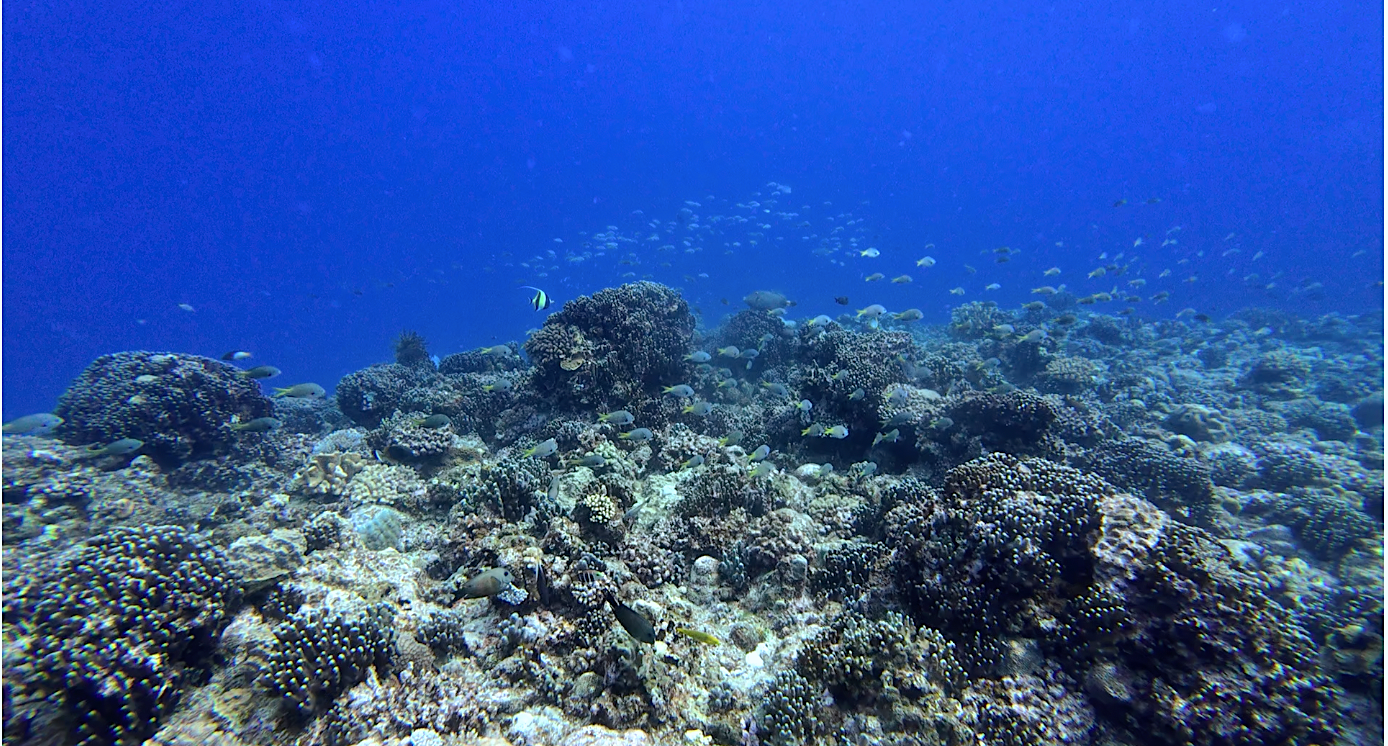
I watched clownfish dance in their anemones, played with spotted giant clams, and poked my hands into schools of fish. But everywhere I went, the coral was the star of the show. There was a no bleaching (or not much) that I could see. Even though I didn’t see a sea snake or a turtle, being amidst so much healthy coral was exhilarating.
That there’s still so much to care for on Japanese reefs was a message we tried to share with audiences for the rest of the trip.
Fun in Fukuoka
The second dive was a free dive on the west coast of Kyūshū island, off the coast of its largest city Fukuoka. It’s the closest you can get to Asia from the mainland of Japan, and so it’s seas have been been a gateway for centuries.
Chad and I drove out to a lovely beach and snorkeled among volcanic rocks that formed reef-like structures. The water was temperate here, and so the marine life was seaweed-based. We saw the most gorgeous psychadelic batstars, lots of little wrasses, and urchins that had carved apartments into the rocks.
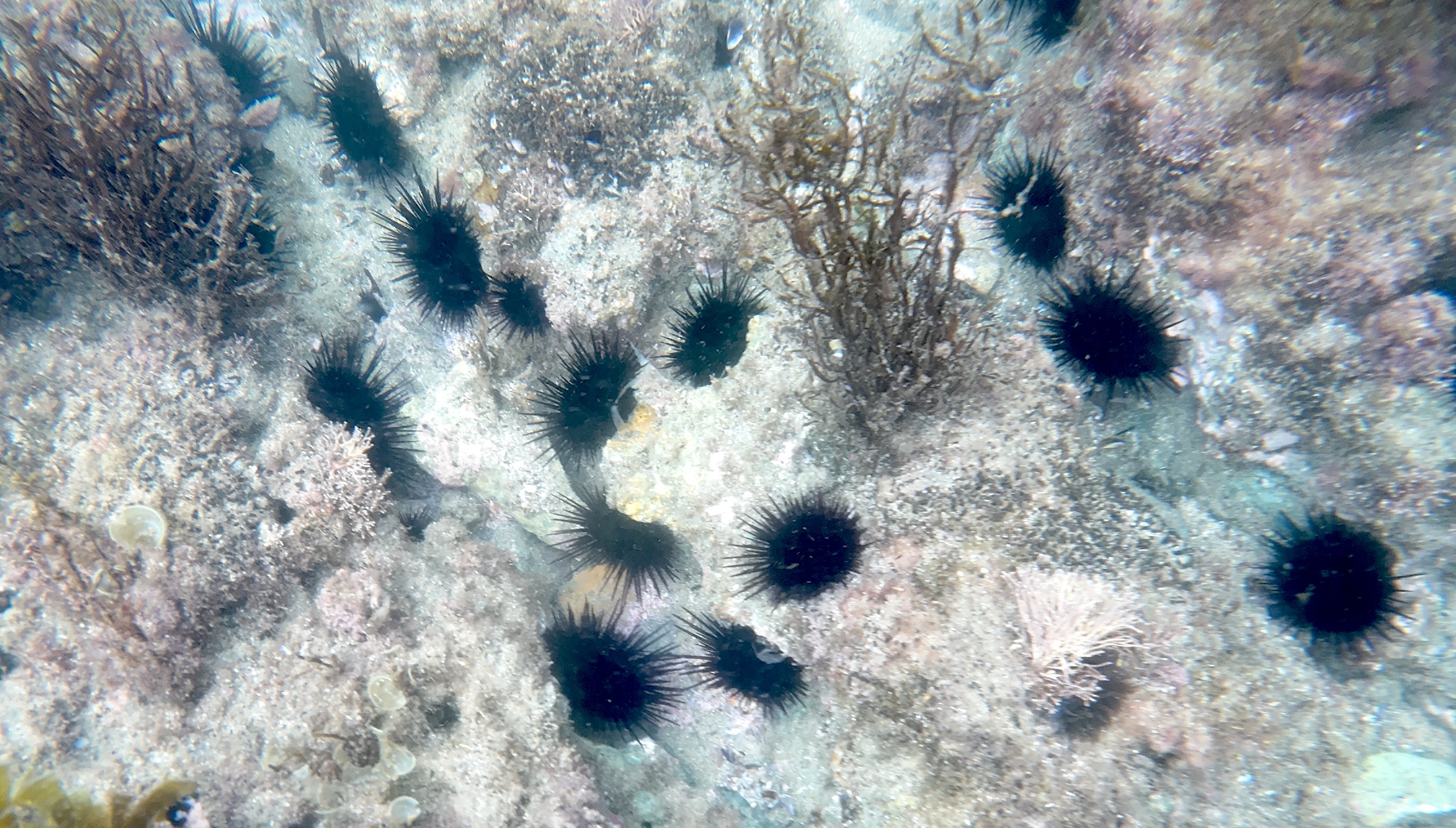
Urchin apartments
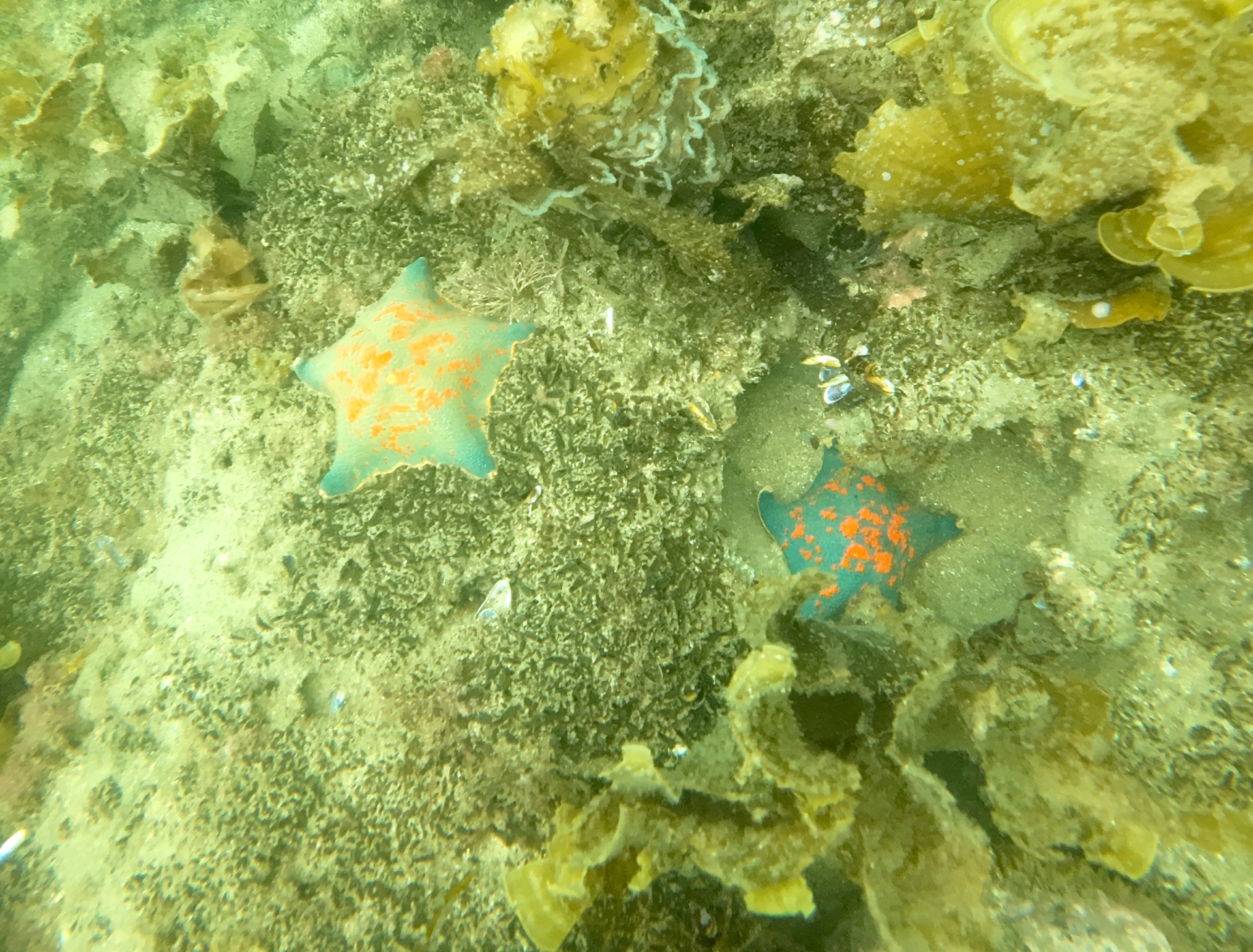
Bright colors on bat stars
Japanese Daisy Coral
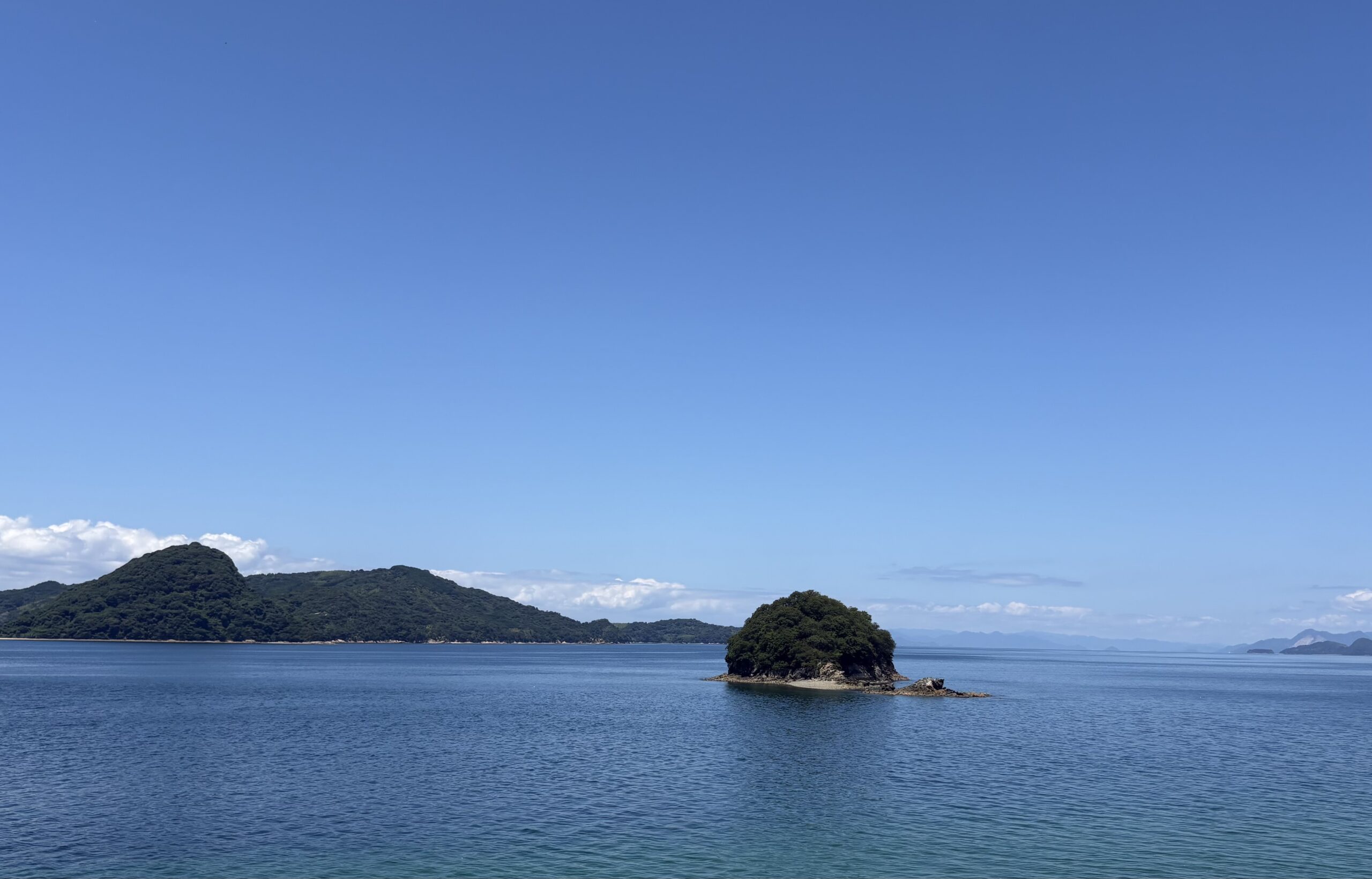
Our next dive took us to the Seto Inland Sea between the islands of Honshu, Shikoku, and Kyushu. We dove off of Suo-Oshimo, near the town of Yanai. The sea is very flat here, because it is nearly surrounded by land, and it reminded me a lot of being in Puget Sound. Rather than jagged volcanic rocks, domed islands rise up from the sea.
What made this dive so fabulous was that we were able to experiencethe biggest population of a kind of temperate coral called Nijon Awa Sango, or Japanese Foxtail Coral, or Japanese Daisy Coral, or Alveopora japonica. Retired schoolteacher Sensei Masaaki Fujimoto has been the champion of this incredible population of 100,000 corals that stretches 3000 square meters. He has spread the word that these corals depend on the health of the land above them, and works with local people to restore native trees to the land. Unlike invasive bamboo or rice, deciduous trees, whose leaves drop every year, ensure that the rainwater filters through the mountain and properly feeds springs that emerge below the awa sango. This modulates more extreme water temperatures as well as provides the nutrients the corals’ symbionts need to survive.
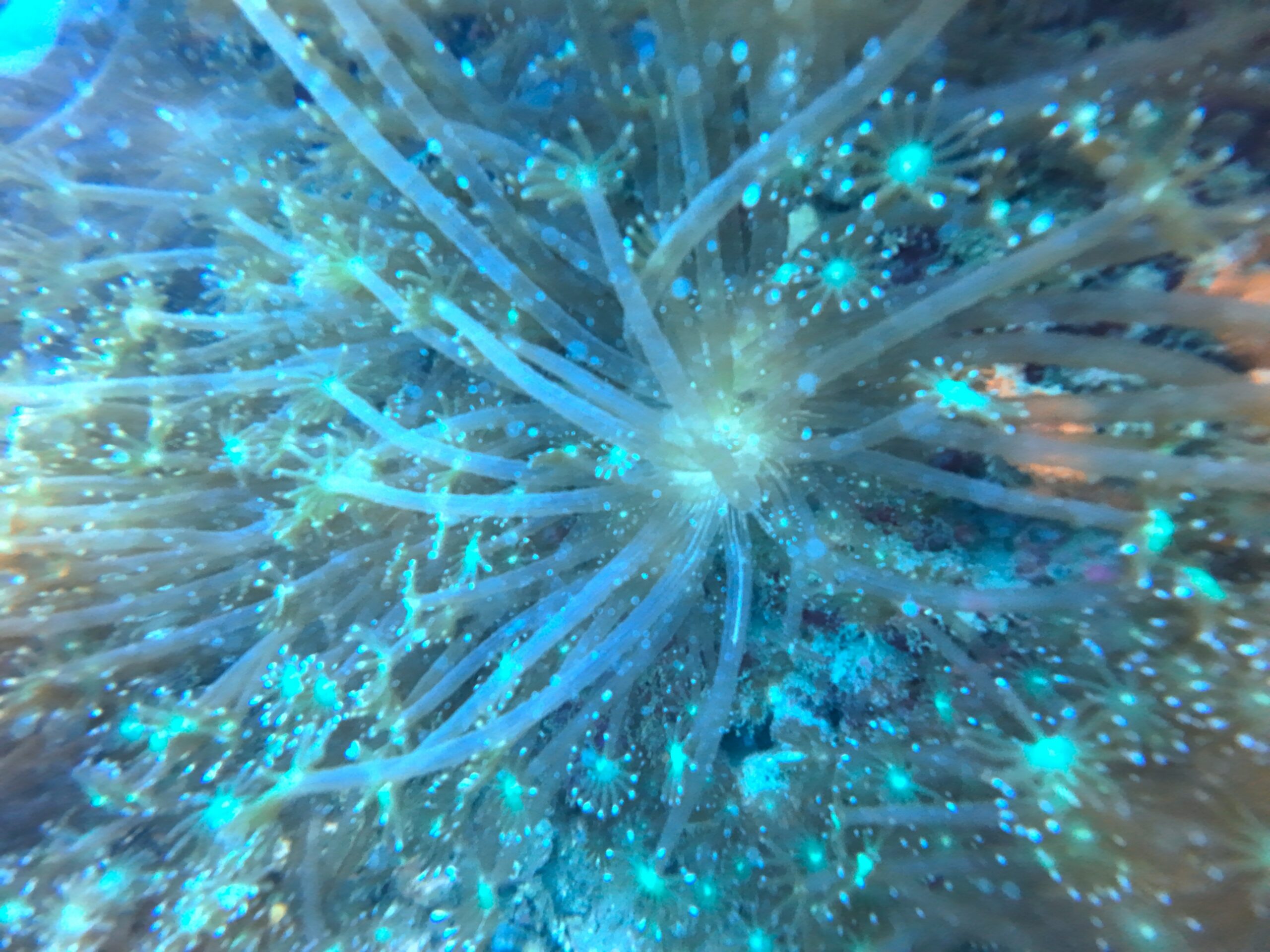
To me diving among the awa sango was like swimming through a garden of daisies that had become charmed into animals. Sensei Fujimoto has tracked the life cycle of the animals and told us to look for the white eggs forming near the base of their long tentacles, which you can see in the photo above. When the eggs are mature in the fall, they will extend all the way to the mouth and will be released.
Kyoto Has a Sea
Next, we traveled north to Kyoto, most well known for its temples and onsen. But our goal was to let our audiences know that Kyoto has a sea too–and it’s stunning! We dove with a shop out of Kyotango, which is on the north coast of Kyoto Prefecture. A fishing boat served as the dive boat, taking us out to a nearby point, past caves in igneous rock.
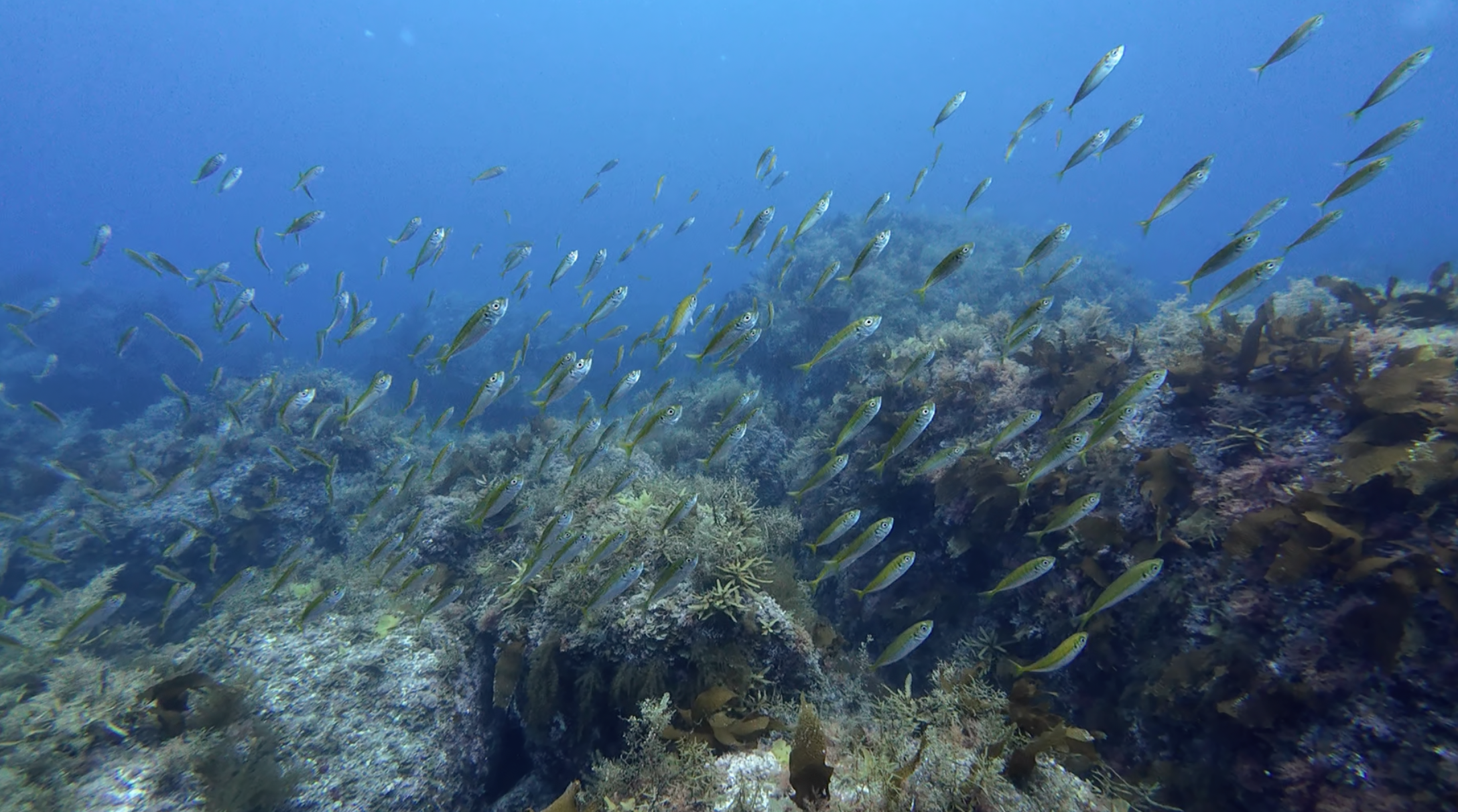
The water was temperate and the rocks were elegantly covered in seaweeds. There were lots of fish, including clouds of shimmering big-eyed sardines. An octopus tended her eggs in one crevasse, but I didn’t want to disturb her by taking a photo. I spent too long watching a blue nudibranch with yellow stripes called a festive sea slug wiggle among the weeds. The light was dramatic through the cracks in the rocks, and looking up to the sunshine the fish were spotlighted as if they were on a stage.
Later in the afternoon, we hiked down to a beach to snorkel. We played with elegant comb jellies, found purple pom pom feather worms that looked straight out of Dr. Seuss, and spotted a massive indigo sea hare.
In the Shadow of Mount Fuji
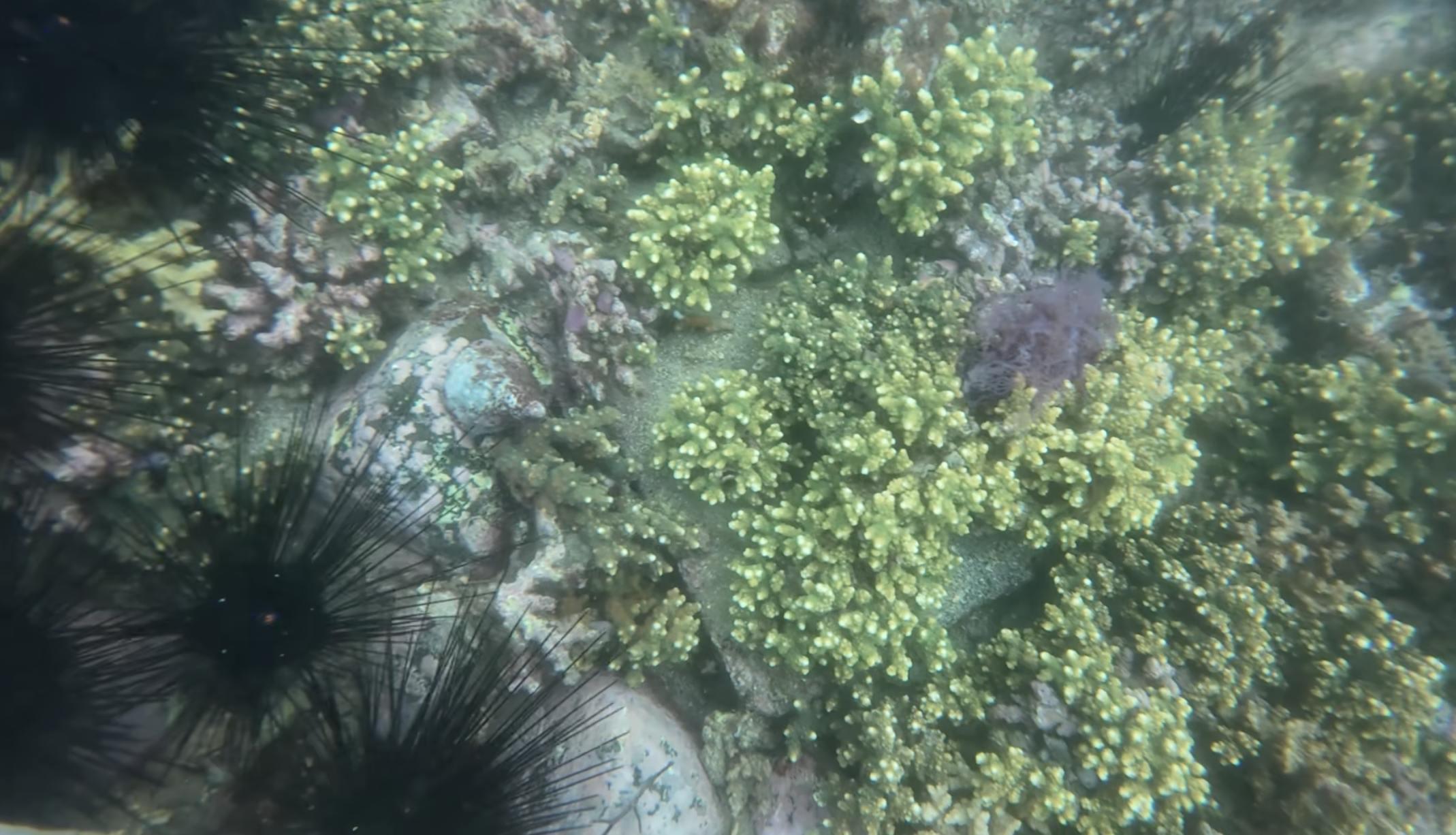
Our final dive was in the shadows of Mount Fuji on the Izu Peninsula. We dove at Hirasawa Marine and were joined by Masako Nakamura and her lab member at Tokai University, who are working hard to protect the Acropora japonica corals. They are among the most northern of the genus.
The visibility was pretty bad; there was a big bloom of dinoflagellates. But a rope line strung along the seafloor made a pathway for us. We saw massive anemones, some even with clownfish. A moray eel made a home in an old tire. There were beautiful but toxic flower urchins and a kind of Mad Max structure full of all kinds of feather stars and soft coral. The dive ended in the restoration site that Masako and her students had created. We were in a rich garden of green coral with a healthy herd of urchins to keep them clean.
Although it’s behind a paywall now, I can manage to see the first line that I wrote in that Nat Geo piece all those years ago:
“The waters off the coast vary from frigid to temperate to tropical. The marine life is uniformly extraordinary.”
After finally seeing it myself, I can honestly report that I got it right back then. I hope I get to go back soon!