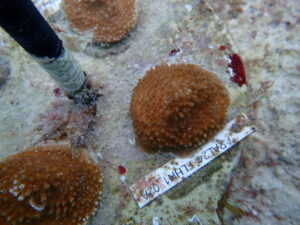
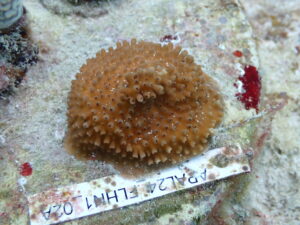
We LOVE getting reports from our colleagues at the University of Miami with updates on the elkhorn corals (Acropora palmata) planted off of Key Biscayne last summer. And we just got an update yesterday: the Flondurans are still flourishing!
These historic babies have one parent from Tela and another parent from Honduras, giving them the adorable moniker: Flondurans. The reason they are historic animals is because they are part of the world’s first transplantation of corals whose parents hail from another country. This was a major regulatory breakthrough that we hope opens the door to more of these types of international collaborations. For more of the media that surrounded this event, please check out our previous post.
Tela has the potential to have an outsized influence on the future of the elkhorn coral species because it still thrives in miles of jungles in the bay. Elsewhere in the Caribbean, its populations have unfortunately fallen to critical levels. Just two months ago, elkhorn corals and their cousins staghorn corals were declared functionally extinct in Florida. This same species of elkhorn corals are a priority for our biobank, the first on the Honduran mainland.
University of Miami doctoral student Fabrizio Conejo, who works in Andrew Baker’s Coral Reef Futures lab, sent us a few fabulous photos of some of the Flondurans that he took during a monitoring dive yesterday. A total of twenty-five were planted, and all of them sailed through the summer heat beautifully. The hypothesis is that because Tela’s elkhorns continue to thrive under challenging conditions, they can pass their resilience to their offspring.
So far, seems those Flonduran offspring are pretty darn happy and flourishing in Florida’s seas. They seem to be growing in diameter, and in these latest shots, it looks like they are now poking upwards too. Check out those cute little polyps!