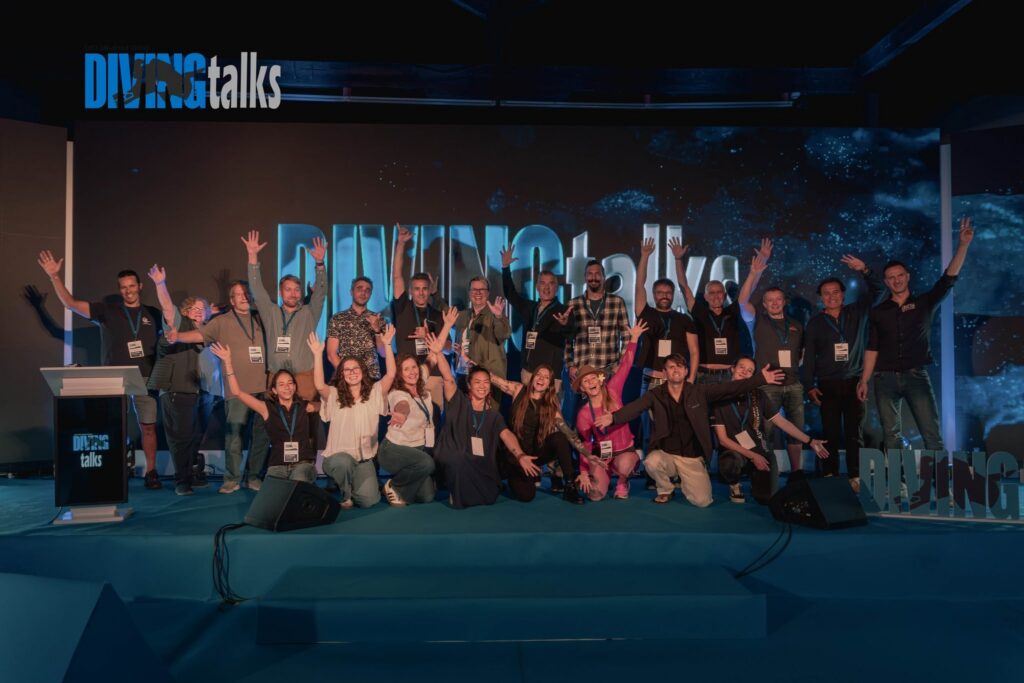
Last year at Diving Talks in Lisbon, Portugal, I shared the story of how I went from lawyer to ocean storyteller and explorer. This year, I was invited back to share about my work in Tela, Honduras, with Tela Coral.
The subject was a reef that has no business being quite so healthy. Or at least, that’s what has made it so interesting from the get-go. Tela Bay is not pristine; in fact, the bay has its fair share of the usual Caribbean reef troubles: pollution, runoff, disease, warming waters, overfishing. And yet, somehow, the corals are hanging in there. They’re surviving and thriving, in some cases. Why?
I had four minutes to make the case, introduce a few theories, and leave everyone with a mystery to chew on. I called it The Mystery of the Reef That Shouldn’t Exist.
I decided to frame my lightning talk as a cold case to solve, together.
Every good mystery needs a cast of characters, so I introduced our principal investigators: Antal Borcsok, Christian Carias, and the wider team at Tela Marine and in Tela. Then came the usual suspects in any coral reef investigation: pollution, agricultural runoff, disease, warming waters, overfishing. Each had motive, means, and opportunity.
And yet, the victim wasn’t a victim. Against the odds, Tela’s reef continues to show inexplicable health and resilience.
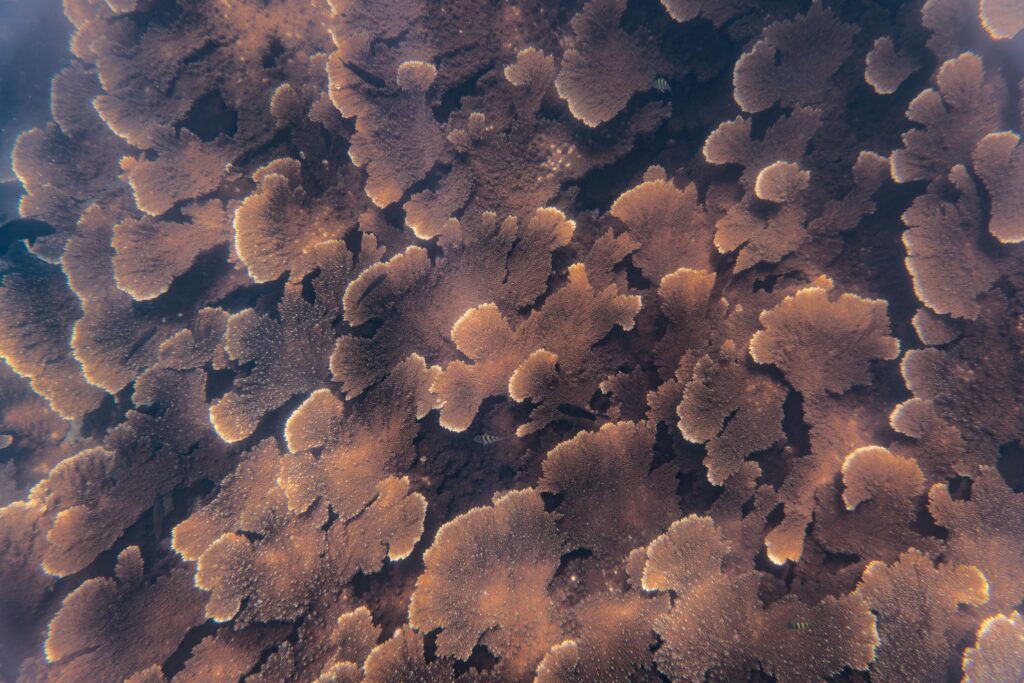
I shared photos from our most recent expedition, just six weeks earlier, when we were in Tela for our coral spawning Adzenture. The elkhorn corals looked pristine: vibrant color, healthy growth edges, no bleaching. The most visible damage we’d found came not from disease or heat, but from humans: a large anchor had landed on and flipped over a massive stand of elkhorn. Fortunately, we turned that unfortunate incident into an opportunity for our first coral translocation study.
So, if the usual suspects aren’t taking this reef down, what’s keeping it alive? I shared three leading hypotheses:
1. Special houseguests. Professor Andrew Baker at the University of Miami believes Tela’s elkhorn corals may be especially resilient because of the symbiotic algae living inside them. Research into these relationships has helped lead to our world-first outplantings of “Flonduran” corals—Florida-Honduran crosses—in multiple locations in the Florida Keys.
2. A different dinner menu. What if Tela’s corals have adapted to rely more heavily on filter feeding, rather than the photosynthetic energy supplied by their symbiotic algae? It’s a compelling possibility in a place where the water is silty and cloudy for much of the year.
3. X-Men coral. Tela’s distinctive black sand contains roughly 25% titanium and washes over the reef two or three times a year. Could it have shading or even antiseptic properties that help the corals? It’s an intriguing theory, and one we’re eager to investigate.
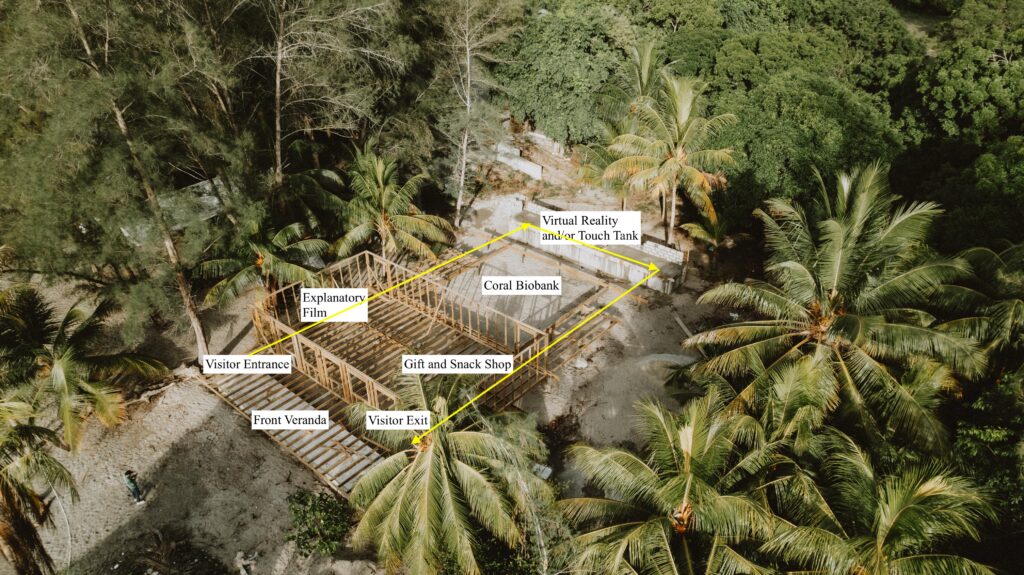
Of course, the case is still open. We’re welcoming collaborators, researchers, and curious ocean enthusiasts to help us follow the evidence. We’re also building a new home for the investigation: a living coral biobank that will support future research and help unlock the secrets of this extraordinary reef.

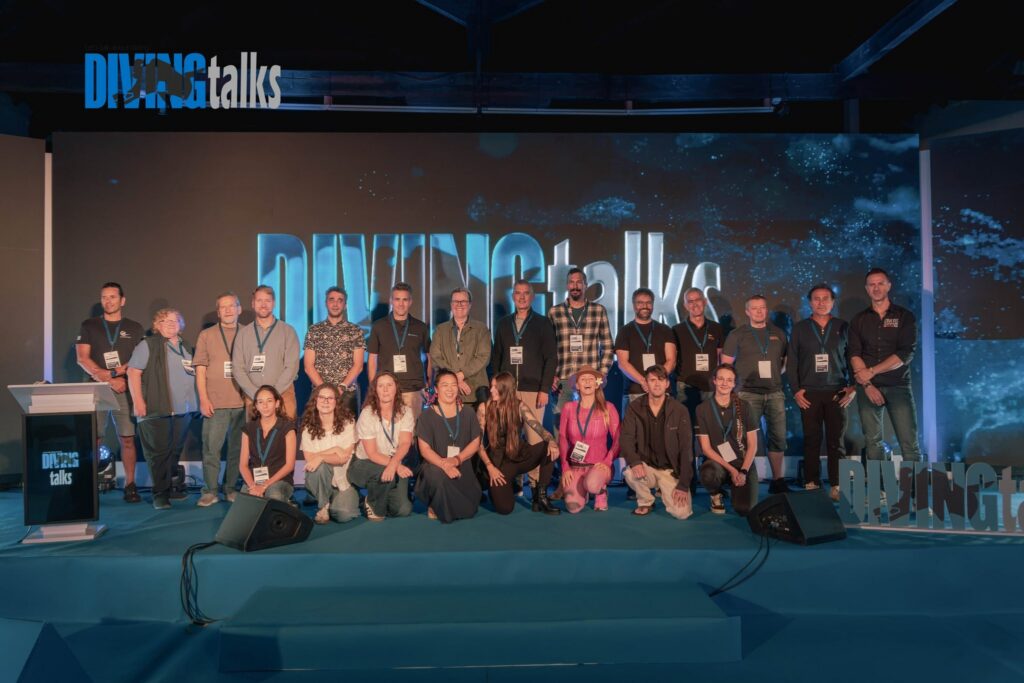
The response to my four minute talk was wonderful. Several people came up afterward wanting to know how they could arrange future trips to Tela, while coral scientists from around the world were eager to learn more and explore potential collaborations.
That’s the magic of Diving Talks. It brings together so many facets of the scuba diving world under one roof, creating space for the conversations, ideas, and connections that move our community forward.
Working with Tela Coral has given me an incredible sense of purpose and agency. Getting to share that work with people I respect, meet new friends, and find potential collaborators who are just as excited about this reef was a real joy.
The investigation continues. The case is open. And we’d love to have you join us.
Thank you, Diving Talks, for the opportunity to share the mystery that has shaped my life for the last three years!
Até à próxima, Lisboa!